Apollo
Music
Igor Stravinsky
Choreography
George Balanchine
To improve your experience on our site and ensure your security, please upgrade to a modern browser such as Chrome, Firefox, Safari, or Edge.
You have the promo code applied
{{ perf.day }} {{ perf.month_date }}
{{ perf.time }}
Performed with:
Subscribers Only
On sale to general public: {{ perf.subscriber_only_date }}
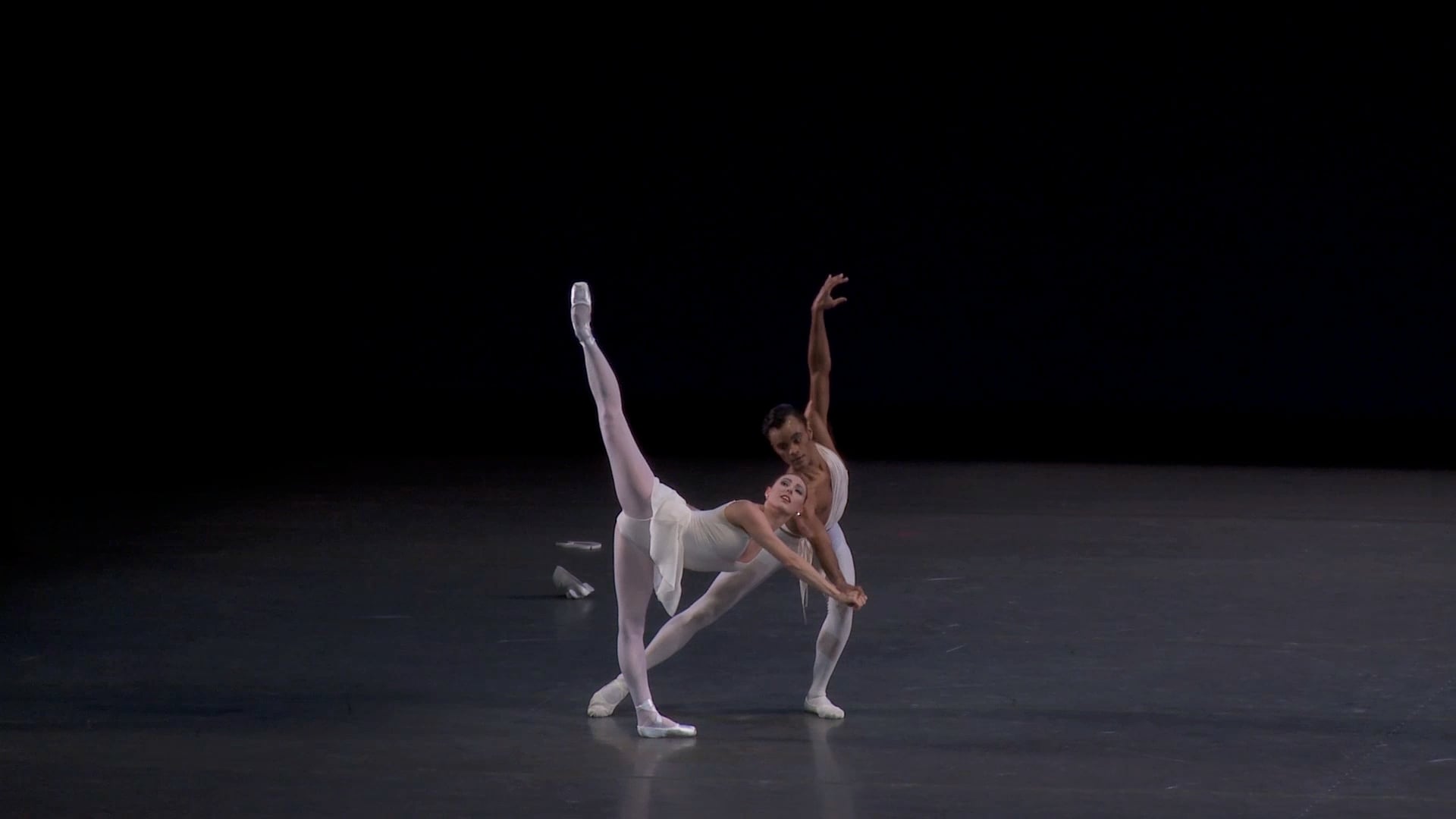
Balanchine's first collaboration with Stravinsky and one of his earliest international successes, Apollo presents the young god as he is ushered into adulthood by the muses of poetry, mime, and dance.
Apollo I look back on as the turning point of my life. In its discipline and restraint, in its sustained oneness of tone and feeling, the score was a revelation. It seemed to tell me that I could dare not to use everything, that I, too, could eliminate.
George Balanchine
Apollo is the oldest Balanchine ballet in New York City Ballet’s repertory. Created for Serge Diaghilev’s Ballets Russes, and originally titled Apollon Musagète, the ballet premiered in Paris in 1928 and was Balanchine’s first major collaboration with composer Igor Stravinsky. With this dramatic and powerful ballet, which created a sensation when it was first performed, the 24-year-old Balanchine achieved international recognition. The 1928 premiere of the ballet featured sets and costumes by the French painter André Bauchant and in 1929 new costumes were created by Coco Chanel. The ballet was first performed by New York City Ballet in 1951, and during his lifetime Balanchine continued to revise the work, eliminating sets, costumes, and much of the ballet’s narrative content.
28 minutes
Enter your name and email address to receive email communications from New York City Ballet, including special offers, on-sale dates, and other updates.
{{complete_msg}}
{{error_msg}}